Posted on Leave a comment

Paperwhite Flowers

Growing and Caring for Paperwhites

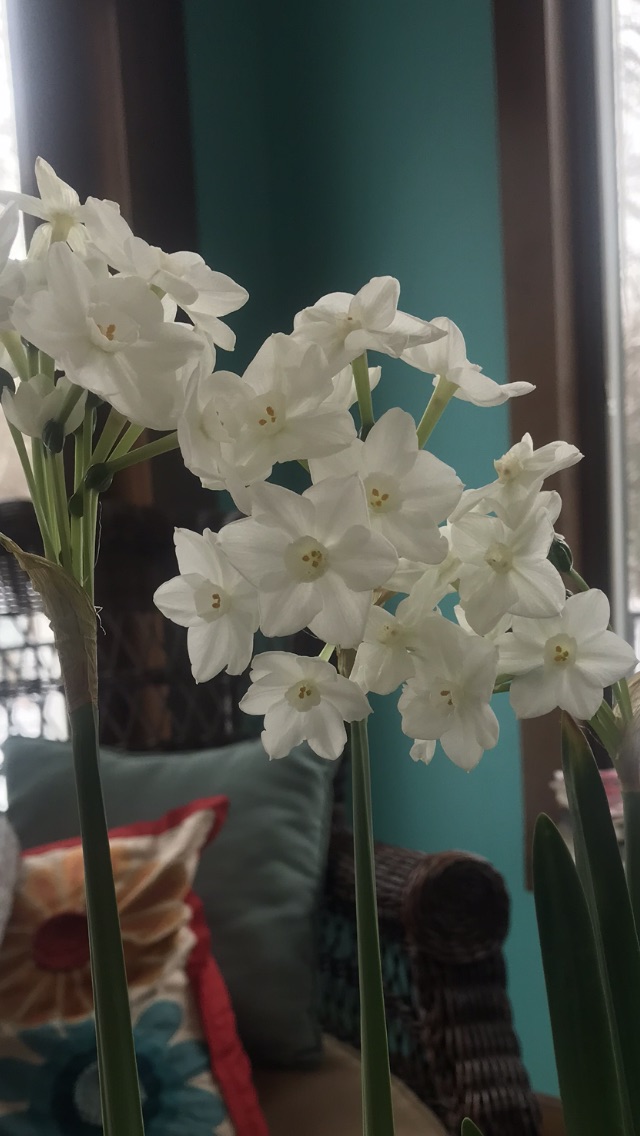
Paperwhite flowers are super easy to grow and add a nice pop of color to the room during cold weather months. People often ask me how to care for paperwhites so I’ve outlined my process below in a few simple steps.

Five Steps for Growing and Caring for Paperwhites

  1. Paperwhites belong to the narcissus family, same as daffodils, and are commonly grown inside during the winter months. There are a number of varieties, so have fun selecting your favorites. Bulb size matters, so go for the biggest bulbs you can get your hands on for stronger stems and more flowers.
  2. Consider using an organic potting soil for your plants. Potting soil is different from garden dirt, its lighter (often containing fertilizer) to help plants develop strong root systems. Some people use stones or marble instead of soil, which is fine too.
  3. You can use any container (preferably with drainage holes to prevent water build up). The container size needed depends on the numbers of bulbs you are planting. These flowers look nice planted in clusters. For a strong showing, consider combining paperwhites with amaryllis in the planter.
  4. Plant the bulbs on top of the soil and press them slightly into the dirt. The bulbs should be near fully exposed.
  5. Place your planter in a location with full or filtered sunlight and water every 2-3 days. (These plants do not like wet feet, so avoid overwatering. (Turn the ceiling fan on if you need to dry them.) More sun is better, but if that’s not an option for you, I’ve tested different locations in my home and have found they do well almost anywhere (regardless of the amount of sunlight). Some plants can get leggy with insufficient sunlight. If so, consider staking them.

Post Harvest Care

Cut the stems once all flowers are spent and store the bulbs and container in a cool dry place. You can store the bulbs in a paper bag in a basement or garage. My bulbs often have babies, which I leave attached to the mother bulb. It may take a couple years, but the babies will flower eventually.

If you found this article was helpful, please consider tagging #le_pommier_org on IG or #LePommierLLC on FB in your posts.

Happy Growing!

Posted on Leave a comment

Growing Amaryllis

A guide for the care and feed of amaryllis plants

Getting Started

Amaryllis are the perfect flower for growing indoors during the cold weather months. People often ask me how to care for these bulbs so they produce flowers year-after-year. I’ve outlined my process below in five simple steps.I hope you find them helpful.

Five Steps for Successfully Growing Amaryllis

To grow Amaryllis you only need three tools: a garden pot or vase, the growing medium, and one or more amaryllis bulb(s).

  1. Choosing the right bulb is of utmost importance. Amaryllis come in all kinds of varieties producing various stem lengths and flower colors. So go crazy and pick out a good one. After selecting the variety, bulb size is equally important because the bulb size generally determines how many stems and flowers the bulb will produce. (Bulb size is a measurement of the bulb’s circumference taken at the widest part.)

Longfield Gardens published the below metrics for how many stems and flowers each size bulb is likely to produce:

26/28 cm – 1 stem (occasionally 2) with 3 to 4 flowers

28/30 cm – 1-2 stems with 3-4 flowers per stem

30/32 cm – 2 stems with 4-5 flowers per stem

32/34 cm – 2 stems (occasionally 3) with 4-5 flowers per stem

34/36 cm – 3 stems with 4-5 flowers per stem

See https://www.longfield-gardens.com/blog/?p=amaryllis-bulb-size-what-the-measurements-mean-and-why-they-matter#:~:text=Amaryllis%20bulbs%20are%20sized%20by,%2C%20measuring%2034%2F36%20cm.

2. Growing medium is probably less important for amaryllis. Amaryllis are known to thrive in circumstances of neglect, e.g., in wax housings or glass vases filled with rocks. My preference is to set the bulb on top of organic potting soil. Remember, the bulb should be fully exposed with only 1-2 inches of the base covered by soil or other potting medium. You can cover the soil with moss if you would like to add more interest to the pot.

3. Regarding the container, you can use a glass vase or a 4-6″ garden pot. You don’t need a lot of room unless you are planning to put multiple plants in a single container. (If so, adjust the pot size accordingly.) You may want to stake longer amaryllis stems with, e.g., bamboo, etc. (18-24″ inches tall) and secure with Velcro tape.

4. Amaryllis do not like wet feet, so water only as needed. The soil should feel damp to the touch but not wet. My rule of thumb is to water every 2-3 days with a small amount. If you think you over watered the plant, turn the ceiling fan on to help dry the top soil. Your amaryllis should begin to flower within 2-3 weeks of bringing the plant indoors, with larger bulbs blooming for up to two months.

5. After the flowers are spent, remember to cut the stems down to the bulb to make room for more stems to grow, taking care not to cut the leaves. After all flowers are spent, you should have a plant with long chunky green leaves.

Post Harvest Care

Consider the bulb as a power station for your flowers. Taking care to feed the bulb’s energy needs throughout the year with plenty of sun exposure, the bulb size will increase incrementally and produce even more flowers and thicker /stronger stems for years to come. You can keep your plant going throughout the year by setting the pot in a sunny window indoors and outside in the summer. I generally let my amaryllis go through to October and then cut the leaves down flat against the bulb (removing all plant matter). You can store the bulb in a cool dry place, e.g., in a paper bag, until you are ready to start again. I usually start mine in early December. You don’t need to water the bulbs while they are dormant (in storage).

Happy Growing!

Posted on 2 Comments

Growing Sweet Pea

If your hands are feeling idle and you find yourself longing to get your fingers back into the dirt, sweet pea should be at the top of your list for spring planting. Sweet pea are tall elegant vining flowers long used in Victorian and cottage gardens for their fragrant and colorful blooms. Long stems also make sweet pea ideal for cutting gardens. While not the easiest flowers to grow, you can successfully grow sweet pea by following these five simple steps.

Five Steps for Growing Sweet Pea: Soak, Sew, Cut Back, Plant, Feed

Sweet pea prefer cooler weather and may be planted outside after the last frost date. Many gardeners prefer to get a head start by planting seeds in trays inside, which can be done six to seven weeks before the last frost date. You can check the last frost date for your area on the Farmers Almanac website at https://www.almanac.com/gardening/frostdates by entering your zip code in the search bar. Then, follow these five simple steps.

1. Soak Seeds

Sweet pea have round hard seeds that look like peppercorns. Before planting, first soak seeds in room temperature water for 24 hours. Some gardeners also nick the surface of the seed with a knife to encourage them to grow.

2. Sew Seeds

Sew seeds in a sunny area one inch deep and six inches apart. If planting in trays, place the seed tray under a sunny window or a grow light. Plants generally need eight to ten hours of sunlight daily to grow. Sweet pea seeds germinate within one to two weeks of planting. During this time, the soil should be kept damp but not wet. Overwatering can cause root rot or plants to dampen off (turn yellow and die).

3. Cut Back

Once seedlings emerge and sprouts reach six inches tall, pinch or cut off the top one inch. Cutting seedlings back is a necessary step to encourage thicker stronger stems and will cause plants to branch out (for fuller/bushier plants).

4. Plant Seedlings

If started inside, plant seedlings outside after the last frost date. Remember to harden plants off before planting them outside. (Bring trays outside during the day and inside at night for one week to allow plants to adjust.) Sweet pea should be planted in a sunny location with a minimum of eight to ten hours of sunlight per day, spaced six inches apart. Because most sweet pea varieties reach six to eight feet tall when fully grown, plants will require support (with a bamboo stake, tee-pee, obelisk, or trellis). If using stakes, consider attaching garden netting to the stakes to support a wider area of plants. If using pots, plant seedlings along the perimeter of the pot and insert an obelisk or other support structure in the center. Secure plants with string to the support structure.

Because plants grow as much as one foot each week, check them weekly and tie up new growth as stems grow taller.

5. Feed Flowers

Sweet pea are generally considered hungry plants and will require monthly feedings of high potash fertilizer. (Tomato feed generally works well.)

Flowers should emerge 90-120 days after vining. To encourage new growth, cut flowers regularly. Sweet pea typically bloom from June through October, depending on where you live and when plants were started. Flowers will last up to four days in a vase with water.

Save seed pods in the fall for planting the following year. Sweet pea are not edible plants but the seed pods do look like the edible variety namesake.

Posted on Leave a comment

Growing in Small Spaces

In can be tough for gardeners when space is tight, especially if you are afflicted with an ever-wondering eye that wants to buy one of everything at the nursery but have no where to put it all. Fear not friends, europeans have mastered the art of living and gardening in small spaces and have pulled it off swimmingly. In these situations, a few well thought out ideas can really brighten a small space and turn it into a retreat.

Priorities are key when building out the small garden plan. Take a hard look at what you want and/or need to accomplish with the space. Before we moved to our current home, we lived in an “in town” location which had a city-sized lot, meaning our garage was behind our house and our backyard consisted of a patio, a mere small patch of grass, and mostly paved driveway. But, I have been very fortunate to travel a lot and one thing I’ve noticed is that lot size does not determine the beauty of a garden. Case in point, consider all the beautiful cottage and roof top gardens featured in magazines and on television.

When space has got you feeling like you’re wings have been clipped, take the challenge and let your inner creative loose. Just like your living room, a garden is a defined space that has a length, width, and height that you can leverage.

Considerations for Designing Gardens for Small Spaces

  1. Use the available vertical space (people often grow apple trees on flat vertical planes – a fruiting art form called espalier; vegetables can also be grown on trellises and grapes on a pergola);
  2. Consider using pots – flowers, trees, and vegetables can all be grown in pots (be sure to use appropriate sized containers; also consider allocating additional budget for pottery that defines the space);
  3. Reduce plant spacing (high-density farming is an increasing trend in commercial growing applications (which means that plants are grown closer together with promising results));
  4. A water feature, whether a fountain or bird feeder, can add a touch of elegance and the sound of water flowing is magical;
  5. Lights can also help define the space (consider string lights, lanterns, led lights, electric lamps, a fire pit, fireplace, etc.);
  6. Consider the variety of statuary available, whether formal or whimsical, but have fun with it (We have the Easter Island Statue in our backyard which stands guard over our swimming pool at night. Last year I planted a bunch of border-sized dahlias around it that bloomed all summer); and
  7. Consider a small cafe style table instead of a full sized one (in Paris many restuarants have bistro tables that are pushed together for bigger groups).

If you found this information useful, be sure to subscribe to our blog to receive updates from the farm.

Posted on Leave a comment

The Conundrum of Annuals

So, my neighbor, who shall remain nameless here, only wants to plant perennials. The rational for his decision is that annuals are way too much work. But, the fact is that you limit your plant options if you only work with perennial plants, which come with the assurance that they will reappear for at least three consecutive more years. That is versus the alternative of planting annuals which exhaust their full life cycle in a single growing season. But, do they really only last one growing cycle? More on that in a minute. Sometimes plants act like annuals when they are planted outside of their (USDA) growing zone. All plants are rated as native to a growing zone, which you can find with a simple Google search and match up to the zone where you reside (with your zip code). See https://planthardiness.ars.usda.gov to find your zone.

So you may wonder then, why would anyone want to plant annuals if they only last for a single growing season. The simple answer is that you will have access to a wider selection of flowers with more colors if you set aside growing zone assumptions. I challenge you to consider, if you have been following along our plan, which plants are turning your head as you scroll though inspiration pictures (in magazines, Instagram, Pinterest, etc.). You will find that some of your ”favs” are often likely annuals in your zone (unless you live in California, where they are rewarded with beautiful weather year round). Most of us need to slug around the garden and consider workaround strategies that fit with Mother Nature’s schedule. But alas, there are workarounds. Consider dahlia tubers which you can dig up in the fall and replant in the spring.

Dahlias as Annuals

Its fitting to talk about dahlias since we are having our annual dahlia sale. You can check out pics for inspiration on the https://le-pommier.org website, but there are many more varieties and options available out there. Dahlias come in many sizes and heights, starting with a potted or border-size plant all the way up to plants with 5-6 foot stems. Beyond height, is the size of the flower bloom, some of which range up to the size of your head (no joke). If you hear the term dinner plate variety, it means that the bloom is pretty substantial.

I have a range of dahlias in my garden, beginning with American Pie, which looks great in a pot (or border) up to the Kelvin Floodlight (which is about 50 inches tall and has a bloom that approximates the size of a dinner plate). I arrange them in rows with the tallest in the back, medium in the middle, and so forth. Dahlias are not native to my zone, so I have to dig them up in fall after the first or second frost and store them until they can be replanted again. But, I love them. I love looking at them, I cut them, and even my neighbor (who doesn’t want to be bothered with annuals) told me that he can see ‘Kelvin’ from his bedroom window.

Your assignment this week if you accept it is to check out dahlia photos online and consider for your garden plan.

Key Factors for Growing Dahlias:

  • Take note of plant height and spacing requirements (dahlias look nice when planted in bunches);
  • Stake taller plants with bamboo sticks (which you can buy at most garden centers or Amazon);
  • Take cuttings for inside and proudly display in a vase;
  • Dig up tubers in the fall (after the first frost) if they are not native to your USDA growing zone;
  • Store tubers in a cool dry space (garage or basement often work);
  • Replant in the spring or later (after all danger of frost has passed); and
  • Buy more dahlias for next year 🙂
Posted on Leave a comment

Buy or Build?

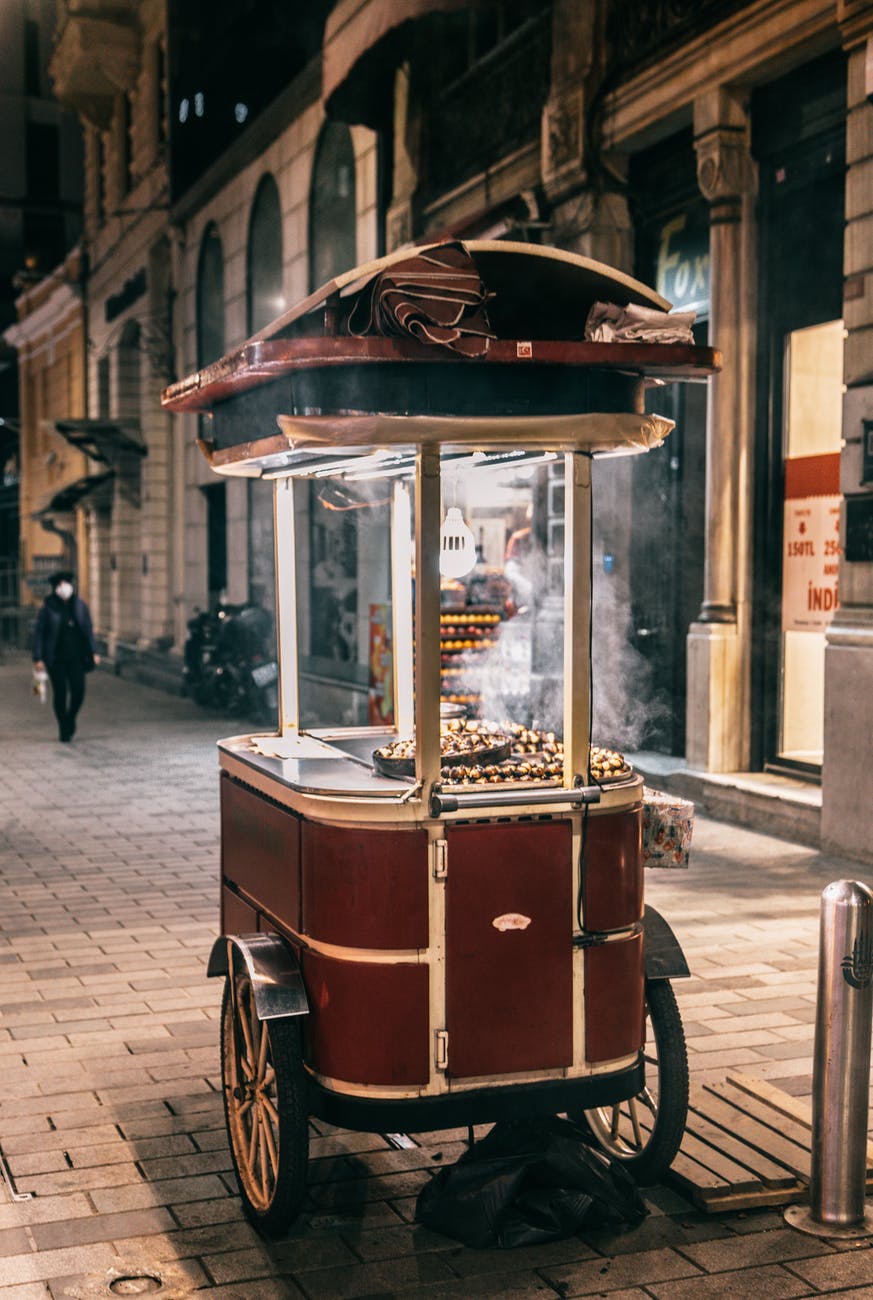
red cart for selling street food

Let’s talk about what and why (and we’ll defer how to a later post).

What to grow depends entirely on the specific factors/outcomes that you want to achieve. The three applications / uses that stand out to me are fragrance, culinary, and cut flowers. If you rely entirely on the garden center, you will have a beautiful and likely expensively cultivated garden that should produce consistent results with minimal effort, meaning all you need to do is pick a spot for your flowers and plant.

But, many gardeners augment garden center flowers with cultivated (i.e., self-grown) flowers that are not available at the local five and dime store. This is because the big box stores travel in high-volume circles and only sell proven fast movers. But, if you desire something more, i.e., differentiation, from your neighbors who probably frequent the same shops, you may have to put your back into it. I look for inspiration pictures in magazines, on Pinterest and Instagram, and other seed and bulb catalogs. I also take lots of pictures when I travel of gardens / flowers that turn my head.

Specific Considerations for Flower Selection:

1. Fragrance is an output of many flowers, including roses, lilacs, and plumeria. But not all roses have a fragrance and certainly neither do all flowers. When I’m shopping for roses, some of the specific attributes that I consider are the appearance/shape of the blossom, color, bloom size, stem length, and fragrance. It’s not always easy to get everything you want in a single cultivar, but an assembly of varieties planted together can look and smell amazing. I have more than 100 different roses (including rose trees) in my collection.

2. It goes without saying that vegetables and herbs are edible, but so are many flowers. It may sound foreign to eat a flower, but if you toss one into a salad think of all the benefits. They look lovely and can add a hint of flavor (beyond the intrinsic health benefits). Some of my favorites include nasturtium, pansies, and calendula. But don’t be afraid to try new things, risks taken will be rewarded and you will look like a five star (or at least sophisticated) cook to all of your friends when you use them. I suggest you Google the specific variety to find out whether its edible before you take your first bite or, better yet, before you buy it….

3. I already mentioned that stem length is core to my formula. I take cut flowers from my garden all summer. Some gardeners have a specific dedicated space filled with flowers designated for cutting. If you’re not as formal (like me), if you plant enough, there will be plenty to cut without bare spots (if you cut carefully). Some of my favorite cuts are from peonies, tulips, and alliums in the spring; purple cone flowers in early summer; and zinnias and cosmos are work horses during mid- and late-summer that produce week after week. I’ve read that sweet peas are awesome and smell amazing, but I failed miserably last spring at growing them. (They are on the list again for this year, so I will have to let you know how it goes.)

The ”todo” this week (if you are building out your garden roadmap along with me) is to conduct research for inspiration pieces and identify flowers that you would like to incorporate into your garden plan. Take notes and screenshots to ensure you don’l lose track of your finds…

If you enjoyed reading this blog, please subscribe to continue receiving updates from the farm.

Posted on Leave a comment

Season Extension

The cold Chicago weather has me thinking about season extension, which simply means growing plants outside the parameters of one’s growing environment or season. One thing that always resonates with me when visiting other regions are the beautiful flowers that I can only dream of at home this time of year. In fact, I happily spend hours every winter surveying flower magazines for inspiration (and sometimes curse when west coast growers post pictures on Instagram of their flourishing gardens, not withstanding…)

Chicago weather is very temperamental and, as such, it’s extremely risky to plant anything outside before June 1. (I attribute it to Jack Frost’s frequent visits throughout the spring months and inability to contain his wily ways.) But, waiting until June to start planting (whether flowers or veggies) will delay any substantial presence in the garden. Also, most natural color outside is fleeting in the fall when the leaves abandon the trees and the frost kills off any straggler plants after a mere three to four short months.

The way through this quandary is not to flout Mother Nature (because she always wins), but to consider potential workarounds such as growing in containers and/or growing inside. While there are many options, this year I planted approximately 100 ziva paperwhites ‘narcissus papyraceus’ bulbs inside and have been amazed by how beautifully they have flourished.

Growing Indoors in Containers

The process begins with identifying the plant you want to grow. We planted three bulbs in a 6 inch container and then watered them for about 4-6 weeks. The bulbs produce long sleek green stems with clusters of white flowers that bloom for weeks. (Mine grew to about 21.5 inches tall from the top of the container). They also produce a beautiful fragrance that lingers in the air, which I immediately notice when I enter the room. These flowers are light and fresh and offer a welcome hint that spring is just around the corner (when it is needed the most). Also, starting one’s own plants and watching them grow is extremely satisfying.

Paperwhite bulbs are easy to grow in containers and bloom by Christmas, often into January. As an added bonus, the bulbs can be saved/stored (in a cool dry place) after the stems die back and will produce even more flowers next year.

Listed below are a few tips and tricks for successful growing indoors in pots:

  1. Soil mediums are key. When growing in containers, its important to use a light soil medium to support strong and healthy root development. Many growers use a mix of peat, perlite, and vermiculite. But, I personally like the coco coir and Nature’s Cure organic mixes. (Potting soil should be avoided because it is too heavy.) Note, the root system, plant leaves, and sun light are all essential success factors for heathy plant development.
  2. Choose bulbs that have demonstrated success growing indoors and in containers. Bulb size can often indicate how many flower shoots may be generated by an individual bulb. Also, certain bulbs have prooven performance as perennials while others are one and done. Perennials, which by definition come back for at least three consecutive years, are a good investment. (Google your particular cultivar/variety to understand these key considerations).
  3. Don’t forget to water your flowers regularly, but don’t overwater. Research your specific plant’s water requirements.
  4. If the stems get long and top heavy, you could also consider staking them or cutting and displaying them as a cut flower arrangement in a simple vase.

We hope you found this information useful. Subscribe to our blog to receive updates from our flower farm.